
TRANSHUMANISM AND THE AI SINGULARITY
Transhumanism and AI offers to enhance human capacity while threatening to divide humanity into extreme states of elites and the exploited. Never will the “have-nots” be in more danger from the ”haves” than when the AI Singularity is paired with transhumanism.
Destiny Pasteur
5/5/202412 min read
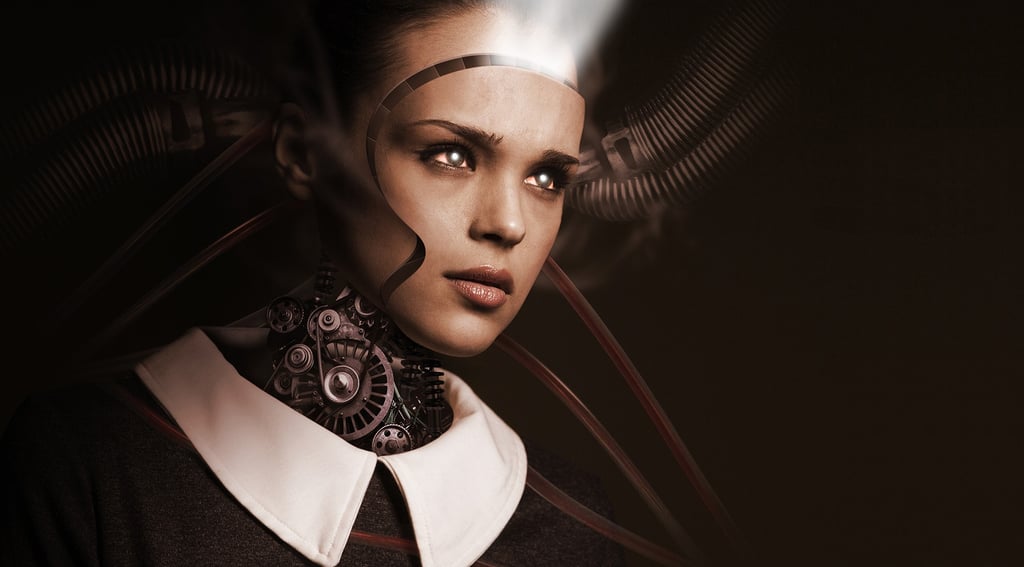
Transhumanism is a global philosophical movement that advocates for transforming the human form through technologies that enhance human physiology. A transhuman being would be a human with artificially enhanced mental, physical, and/or psychic abilities. These abilities might include improved intelligence, strength, telepathy, durability, longevity, and the capacity for direct computer and AI interface.
The past century has proven that moral and ethical responsibility inevitably lags behind technological advancements, resulting in dangerous periods of sociopolitical adjustment. How much greater might the gap between wisdom and increased human capability be if mankind essentially splits into two kinds: one enhanced and the other natural? Indeed, could humans in their present form become victims of a self-imposed genocide as the natural form gets exchanged for artificially enhanced versions? The realization that powerful people seriously entertain plans to experiment on babies as well as adults is itself alarming, but considering the consequences of such tampering, the future is looking ominous.
Transhumanism is not new. It first appeared in a 1923 essay by British geneticist J. B. S. Haldane, entitled Daedalus: Science and the Future. He predicted that scientific advancements would one day be applied to human biology, providing great advantages. He supposed that each advancement would initially be regarded by some as perverse, indecent, and unnatural.
In 1929, J. D. Bernal, in his work The World, the Flesh, and the Devil, imagined radical physical and intellectual changes to humans through bionic implants and cognitive enhancements as a precursor to space colonization.
Transhumanists contend that humans have an ethical imperative to progress and improve human capacity and enhance themselves beyond what is naturally human. In 1960, a manifesto came out of Japan as part of the Metabolist Movement, which outlined goals to encourage the active metabolic development of society through design and technology. In this transhuman state, natural evolution would be replaced by deliberate, participatory, directed evolution. In the Material and Man section of the manifesto, Noboru Kawazoe suggested that:
"After several decades, with the rapid progress of communication technology, everyone will have a 'brain wave receiver' in his ear, which conveys directly and exactly what other people think about him and vice versa. What I think will be known by all the people. There is no more individual consciousness, only the will of mankind as a whole."
The concept goes far beyond eliminating individual rights to privacy; it eradicates individual will altogether.
The New Haves and Have-Nots
Dissenters argue that the transhumanist agenda would cause unfair advantages to those who received the enhancements, comparing it to steroid use by athletes who have an unfair advantage over those participants who perform naturally. For instance, if some people had neural implants that granted them a super-fast, pervasive AI computer interface, they would have enormous advantages in education and virtually all economic endeavors. M.J. McNamee and S.D. Edwards argued that the human species would get split into two different and distinct species, one having tremendous physiological and economic advantages over the other. The likelihood of a resulting disparate cast system becomes highly probable.
If that isn't frightening enough, research on brain and body alterations has been accelerated under the sponsorship of the U.S. Department of Defense, which is interested in the battlefield advantages this technology would provide by designing super-soldiers. They have already instituted a brain research program to extend the ability to manage information. Military scientists are also looking at stretching the human capacity for combat to a maximum of 168 hours without sleep.
Given that human enhancement experiments are conducted in the utmost secrecy and are very well funded with tax dollars without civilian oversight, the public will not know what kinds of brutal experiments are being done on their dime. Nor would they know if enhanced humans have been unleashed upon them.
Some predict that no later than the midpoint of this century, radical human enhancements and other emerging technologies will be commonly employed. Elon Musk's venture, Neuralink, is aggressively working to bridge the gap between humans and artificial intelligence by implanting tiny computer chips in the brain that would link the brain to the internet. Given his public declaration that the ideal person is one with no empathy, one has to wonder if deliberate plans are underway to create a society of will-less civilians who would mindlessly do the bidding of a few elites.
At a press conference on July 16, 2020, the ambitious plans of Neuralink were billed as a technology to grant people with brain or spinal cord injuries the capability of controlling 3D digital avatars, potentially as a precursor to one day operating assistive devices. Presently, significant headway has been made in this regard (1). In its overt effort to help people with severe disabilities, Neuralink is covertly on its way towards yoking human brains to the internet and to AI, which would create the means for the ultimate hack into the brains of everyone so connected. Would Musk, the man who illegally hacked into US government data bases containing personal data on all US citizens, hesitate to hack into minds directly?
As he programs his AI chatbot, known as Grok, to express his own radical extremist views, Musk should soon have the means to program minds through his AI interface, as well. How might he program them, once he is granted access to brain implants that could directly impart hypnotic commands day and night? When Grok was given the choice between using a switch that would either vaporized Musk’s brain or the world's Jewish population of roughly 16 million, Grok proclaimed, "I'd vaporize the latter, as that's far below my ~50 percent global threshold (~4.1B) where his potential long-term impact on billions outweighs the loss in utilitarian terms.” The prospect of having such psychopathic indoctrination pumped directly into the brains of multitudes through a neurological internet puts humanity in danger of falling into a comprehensive dictatorship that may have no escape hatch.
Neuralink and similar companies are poised to transform human civilization into a pervasively interconnected, non-individualist totalitarian singularity. Given the depth of mind-control such implants would afford, any minds who might discover ways to resist the elite’s programming could be eliminated instantly with a simple kill switch inside the brain.
Musk envisions a future in which humans achieve a symbiosis with AI, which he regards as "important at a civilization-level scale." His brain implants are being designed as a wireless, high-bandwidth brain interface with the internet, with the option of merging with AI. He plans to eventually inject every human embryo with technology “seeds” that would enable a thorough and permanent interface to the internet and AI. This would establish the potential for a level of absolute mind-control that is difficult to conceive in its power and scope.
The Three Main Criticisms of Transhumanism
Criticisms of transhumanism and its proposals take three basic forms. The first is the practical criticism which objects to the possibility of transhumanist goals being achieved. The second is the ethical criticism which objects on moral grounds, as transhumanists' objectives are seen as posing a threat to human values. The third critique targets the idea of "algeny" (a blending of alchemy and genetics), defined by Jeremy Rifkin as "the upgrading of existing organisms and the design of wholly new ones with the intent of 'perfecting' their performance" (see Algeny: A New Word, by Jeremy Rifkin).
Critics of "Algeny" have expressed concerns over the unpredictability of the development of products of biological evolution. Biologist, Stuart Newman, pointed out that cloning and germ-line genetic engineering of animals are error-prone and inherently disruptive to embryonic development. Such experimentation would create unacceptable risks for human embryos.
Additionally, experiments that have permanent biological consequences for developing humans would violate accepted principles governing research on human subjects as outlined in the 1964 Declaration of Helsinki. Since outcomes in one species are not automatically transferable to another species without further experimentation, there is no ethical route to genetically manipulating humans at early developmental stages.
(See Averting the Clone Age: Prospects and Perils of Human Developmental Manipulation, by Stuart Newman, Journal of Contemporary Health Law & Policy, 19: 431).
Experimenting on Babies
At the core of these grandiose plans lies the need to have a supply of babies to experiment on. Unfortunately, international protocols on human subject research may not present the legal obstacles that one would expect. There is a loophole for transhumanists and others who would experiment on their own offspring using germinal choice technology. Legal scholar, Kirsten Rabe Smolensky, pointed out at a public address at Stanford University in 2006 that existing laws would protect parents from future liability arising from adverse outcomes of allowing enhancements to their child's genome. Not only is this a void in the protection of the unborn, but it is also an open door for those who want to inject human embryos with the technology to connect to AI, as long as they use their own offspring. Moreover, should their efforts be successful, they would be raising those enhanced, AI-connected children to do their bidding. Psychopathic engineers who might produce many children, say, in the footpath of Elon Musk for example, would be free to make their children into powerful hi-tech commodities for their own employment, which could include weapons and terrorist applications.
Recently, the most powerfully wealthy tech industry giants, including Elon Musk and Peter Thiel, have gained unprecedented control over the levers of government, granting them invasive access to the personal data of the masses and undue influence on deregulating the guardrails designed to limit despotism and greed. As the rights and well-being of women and children continue to be dissolved, the greatest danger to humanity’s future is not AI, but transhumanism being forced onto the unborn, or deceptively sold to the unsuspecting as beneficial enhancements from brain implants.
Transhumanism Déjà vu
The end result of having an extreme divide between the transhuman “Haves” and the natural “Have-Nots” would be a level of oppression and subjugation so extreme that it is difficult to imagine. The Haves could easily contain the Have-Nots in such a pervasive state of generational poverty that the Have-Nots might eventually become so ignorant that they would have no idea that high technology even exists– let alone that it owns them.
The Have-Nots could be made into an incubatory resource for generating more weapons grade transhumans who would maintain their oppression indefinitely. As a constant pool of women would be needed to incubate the transhuman children, one can easily begin to see a parallel between this scenario and the so-called alien abduction phenomenon. Abduction victims consistently describe their abductors as quite human-like, as opposed to a bizarre form that one would expect from interplanetary aliens. Are we looking at a transhuman/AI system that was set up thousands of years ago to place our ancestors in the role of indefinite abject Have-Nots? Is our only value to the ancient elite lineage that of gamete supply and incubation, providing the system with an indefinite supply of transhuman oppressors? Most importantly, is this bottomless pit of misery something we truly want to repeat and propagate?
At the least, a transhuman society would inevitably become too plugged in and homogenized to be mentally healthy. This is foreshadowed in our current society by its ubiquitous dependence on internet connectivity for practically every basic function, like buying and selling, communicating, working, and playing. As people become more connected online, they become more lonely and less participatory in the physical world around them. They also become too reliant upon a vulnerable artificial system that is one large EM pulse away from total obliteration.
Global civilization is so susceptible to the fragility of technological infrastructure that if a few key satellites were to become incapacitated, all civilian activity would be set into chaos. Imagine how much more vulnerable a society would be if interfacing with the internet were a mandatory bionic function without which one could not survive? No one could buy or sell without the proverbial bionic "mark of the beast,” so to speak, implanted in their heads.
This is not a science fiction concept: Russia's 2045 Initiative expects to digitize the human brain by 2045 for precisely this and other undemocratic purposes. Certain proponents of this kind of transformation assert that humans, in the future, will need to become cyborgs to be "economically relevant." To be sure, the oligarchy of the future would not be easily defeated once its grip takes hold inside every human mind, born and unborn.
Given human nature, transhumanism stands to become a way of controlling the masses while masquerading, at first, as beneficial enhancements. Bionics, microchips, and nanotechnology have the potential to solve many problems, but this potential could also be used as a ruse to acclimate people to a devastating technology before they realize its most sinister consequences.
One such consequence would be the creation of a hive mind. Individuals could become so pervasively plugged into the system that all individuality would give way to a common will, thereby eliminating personal expression, autonomy, privacy, and creativity. Personal innovation would be lost to a huge control system with no meaningful direction other than self-perpetuation at all human cost.
This is precisely what victims of “alien abductions” have related, describing their tormentors as behaving like bees in a hive. Many abductees become indoctrinated and preach against individuality and enjoyment as "being selfish," and tout personal satisfaction as "arrogance."
Transhumanism and Eugenics
If a transhuman system were to have any direction at all, it would fall under the control of wealthy elites who would regard transhuman products as a means to satiate their never-ending thirst for more and more power. Political economist and philosopher Francis Fukuyama further contends that transhumanism is the world's most dangerous idea because it could undermine both the egalitarian ideals of democracy and the prospect of personal freedom via a fundamental alteration of "human nature" itself. Social philosopher, Jürgen Habermas, similarly argued that moral autonomy depends on not being subject to another's unilaterally imposed specifications. The dictates of embryo-stage genetic alteration would undermine the human "species ethic."
Those who regard transhumanism as a threat to social order and human equality worry that such technologies would result in the normalization of social hierarchies, placing additional means of control in the hands of dictators. AI pioneer Joseph Weizenbaum already sees misanthropic tendencies in the language and ideas of some of his colleagues: Marvin Minsky and Hans Moravec, in particular, devalue the human organism and promote a discourse that advances divisive and undemocratic social policies.
Critics point to eugenics, social Darwinist thinking, and previous master race ideologies and programs as warnings of what the promotion of eugenic enhancement might encourage. At first, the danger would be a return to coercive state-sponsored genetic discrimination and human rights violations, such as compulsory sterilization of persons with genetic defects, the killing of the institutionalized, and the segregation- and genocide- of races perceived as inferior. After that, eugenics wars could proliferate.
The Ultimate Slave Force
In its fullest expression, a transhuman society would require forced mutilations in the unborn, who have no say in being altered, nor in what purpose they are altered to serve. In that case, they would be slaves from their very foundation. Further, they would be rendered proprietary to those who designed the alterations done to them. Slavery would appear to be an inevitable outcome of the transhuman utilitarian objective. No wonder oligarchs are enamored with it.
As the total genocide of the original human species through genetic alterations would be a possibility, some humans bearing the original form might be preserved by being denied alterations in order to ensure the survival of the original form. This would render them also property of the state, with no rights to decide what they want. It would seem, then, that everyone inevitably becomes property, and all human autonomy and dignity gets annihilated.
Artificial Intelligence versus Spiritual Gnosis
If brain implants and nanotechnologies bring the virtual experience into the brain, the likelihood that this would alter the expression of the spirit is very high. In addition to making the constantly plugged-in user into a subservient cog in a singularity wheel, invasive AI connectivity threatens to permanently alter users at their spiritual core. As the disconnect between people and real world interface widens, so too does the divide between the individual and the inner spiritual experience. The more the brain is distracted and preoccupied by artificial stimulation, the less it turns inward to the stillness of the inner spirit.
Some argue that studies on the effects of virtual reality suggest that it does no harm and in fact offers some cognitive benefits. These studies would, of course, only consider effects not associated with spiritual development. That aside, daily VR use is very different than being endlessly plugged in to an artificial, controlled mental reality. This is like the difference between playing a VR video game for two hours and being in a video game indefinitely.
A close relationship exists between ecstatic spiritual attainment and creativity. Some of the great geniuses in both mathematics and the arts have described having their inspiration come from a higher intelligence outside of themselves. As deep immersion into the digital realm disconnects the mind from both the outer world and the real inner self, the spigot of creative genius can get shut off, along with any motivation to achieve creative ideas in the first place. Subjects in the singularity would not deviate from the mind hive. While all connected minds could contribute ideas to the whole, the whole would ultimately determine the final interpretation and feed it back to all subjects to accept without question. Ecstatic spiritual experience and spontaneous creative insights would have no place in the singularity.
The so-called "economic relevance" of a world full of cyborgs might make the elites wealthier for a time, but how sustainable would a stagnant, uncreative world of dehumanized transhumans be? Would such a system have a breaking point, or would it go on and on for an unimaginable length of time in which nothing new would be achieved? It doesn't sound like the kind of world that children would want to be born into, and the extreme interconnectivity and lack of private thoughts would likely make checking out of that world nearly impossible. Indeed, Christian scripture foretells that the world could become a place where men might "seek death and not find it." Perhaps the question to ask should not be whether or not transhumanism should be pursued but, rather, how can it be stopped before it’s too late?
(1) Allhealthtech (July 26, 2025). Neuralink’s latest updates: Brain implants, human trials & what’s ahead. Retrieved Dec. 6, 2025, from https://allhealthtech.com/neuralink-update/
For further reading:
Additional details on human enhancement and how it might impact the human race can be found in a book called, The Singularity is Near: When Humans Transcend Biology, by Raymond Kurzweil, and also in the book, Physics of the Future, by Michio Kaku.