FREEMASONRY’S MOST PROFOUND SECRET
The Lost Word, Freemasonry’s most profound secret, may be a quest for a hidden spiritual language for achieving divination. Various words given to initiates may not be the Word, as the true Word may be a divination technique concealed in the initiatory allegories.
Destiny Pasteur
12/15/20258 min read
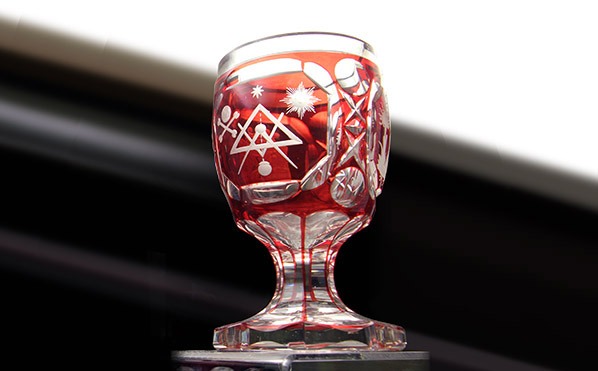
Freemasonry is one of the world's oldest fraternal organizations, with traditions and records going back to the 14th century. It originated from medieval stonemason guilds and describes itself as a "beautiful system of morality, veiled in allegory and illustrated by symbols.” The symbolism primarily relates to the tools of stonemasons, such as the square and compass, the level and plumb rule, the trowel, the rough and smooth ashlars, and so forth. The order attributes moral lessons to each tools and teaches the meaning of the symbolism through rituals, lectures, and articles.
The degrees of Freemasonry correspond to the three grades of medieval craft guilds: Entered Apprentice, Journeyman (or Fellow of the craft), and Master Mason. The candidate of these three degrees gradually learns the meanings of the symbols and is given secret grips, signs, and special words that signify to other members that he is initiated.
The three degrees constitute Craft Freemasonry, each being partly an allegorical morality play and partly a traditional teaching. Ancient Craft Masonry culminates in a mystery attributed to the symbolism of the Lost Word and the quest for its recovery.
Little explanation is provided to the candidate regarding this mystery other than that the deepest objective of the Masonic path is to find the mystery that was lost. It is the consummation of all Masonic symbolism because it represents divine truth. According to Masonic allegory, only three people knew this powerful word. When one of them suddenly died, this most sacred knowledge was lost, despite the other two still possessing the information. This leaves the initiate wondering: "If three people knew the secret word and one was killed, why didn't the other two pass on the secret? How was it lost?"
Many presume that the Lost Word relates to the lost Name of G-d. The ancient Israelites believed that supernatural power was contained within a secret Word that can cause the heavens to tremble and the earth to quake for anyone who dared speak it. This Word, the ineffable Name of the Divine, YHVH, should never be spoken "in vain," meaning without a holy intention to properly and morally direct its immense power.
Some Masonic writers would disagree, stating that the oldest omnificent name of G-d is AUM, pronounced “Aaome,” coming from India. In the Hebrew tradition, however, the Sacred Name is the Tetragrammaton, comprised of the four letters Yod, Heh, Vav, Heh (YHVH). Today, Christians pronounce it as "Jehovah" and scholars as "Yahweh," but since no vowels were used in ancient writings, the actual pronunciation has remained lost. Without that knowledge, the letters have lost their full power.
According to Jewish tradition, the greatest catastrophe of Israel's captivity in Babylon was the loss of the sacred Name through the death of the high priest who had no successor. Since then, priests and scribes have searched to no avail for the lost Name. While they retained the four consonants, the vowel sounds that accompanied them have remained a mystery. Thus, some believe that the Lost Word of Freemasonry is this four-letter name of G-d minus the vowels.
From a more Freudian perspective, one could imagine how this allegory might point to the authentic Self. As Sigmund Freud divided the psyche into the Ego, Id, and Superego, we could posit a correlation with the three priests as archetypal aspects of the mind. The childish Id and the overly parental Superego know the authentic self, or Ego, since they are part of the same psyche, but the true essence of the Ego is lost to them. Their duty is to find this authentic aspect of the Self.
Another possibility is that the Lost Word does not represent a magical word at all but, instead, a language of the Spirit, which includes the capacity to both comprehend and translate divine information into ordinary words. Thus, what was lost was not actually a word but a capacity to engage a hidden means of divine communication.
We know that these priests practiced divination by their use of the Urim and Thummim divination stones, a system that was also lost through the demise of the high priests. It is not a great leap to go from there to the idea that the high priests once used a sacred communication system linked to the Tetragrammaton.
This communication would represent a second kind of language distinct from the spoken word. It would be well represented by the allegory of forgotten vowels that once empowered the consonants of solid letters. While the spoken word flows from the intellect, the lost language would have once flowed from the spirit. The latter would be a pure, unformed idea, while the former is an utterance of ideas. In its aspect of being lost, the language of the spirit has an interface problem with the utterable word. The story of the high priests suggests that our ancestors may have had an effortless interface between the two languages, while we have lost this capacity.
The allegory of the three men who knew the Lost Word suggests that three aspects of our being are requisite to the capacity to tap into the language of Spirit. The three requisite functions would correspond to intellect, intuition, and synchronization.
The first aspect, the human intellect, can deduce the likely existence of the Divine Word but cannot access it. The mind can conclude through logic that all things are interconnected by a transcendental Unity at the ground of all existence, just as all numbers contain within them the power of a singular "zero." While zero lacks a positive number value itself, it nonetheless contains all numerical values to infinity as it upholds every number. The intellect is too linear in its operation to grasp anything more than this about a Divine Principle that is immanent in all things and yet transcends the visible universe. Logic has its limits. The Divine Word remains a mere concept to the intellect.
The second aspect, intuition, allows us to sense the reality of something higher that carries deep meaning, but it cannot give it definition. Joseph Campbell taught that divine love is the visceral realization of the transcendental unity between oneself and another because, at the deepest level, we are all One. Experiencing a sense of the sacred, like gazing at the night sky in awe, constitutes intuitive experiences of unity with the All. However, that which is sensed remains beyond words. The Divine Word remains unspoken. Like the intellect, intuition has its limits. While both provide a sense of the Divine Mystery, neither can tap into it and convert its elusive wealth of knowledge of all that exists into spoken words.
The story of the three men who once knew the Divine Word suggests that our ancestors possessed an ability to tap into a level of divine wisdom that we no longer have. According to Masonic lore, the Lost Word can be partially regained using something they call a "substitute," Could this possibly refer to a divination technique that compensates for the lost innate ability to tap into the Divine Word at will? By utilizing such a technique, might we be able to emulate this lost interface? In other words, to access the Lost Word, we should either possess an innate ability or, alternatively, employ a substitute technique that enables the interface.
The Substitute
According to Rosicrucian lore, we lost our ability to immediately access Universal Consciousness when our ancestors were defeated in a global war. An ancient enemy committed genocide against the original mankind, leaving in their place a spiritually un-endowed remnant to be controlled by priest-kings and ruler gods. These rulers kept the second Adam, or mankind, ignorant through blasphemous, idolatrous religions. According to Masonic lore, the Word has not been spoken since the destruction of the Temple, but in its place, a substitute has been used. Both Rosicrucian and Masonic lore allude to an occult history in which mankind was once more psychically endowed and then devolved after a catastrophic assault.
In a Masonic allegory, King Solomon was forced to introduce a substitute when the Master, who once knew the Sacred Word, was murdered and the Word was lost. This "Master" may represent the original mankind that was annihilated, and the destroyed “Temple” was their original genetic lineage that was replaced by our current devolved line. This might well be the true meaning of the fall of man.
We have to wonder, then, if perhaps a select few initiates might possess an effective divination method, a substitute, that allows them to access the Divine Word of prophecy, despite the genetic downgrade done to modern humans.
One would imagine that utilizing this technique should require three things: a proper intellectual understanding of cosmic structure; good intuition refined by proper attention and practice; and, a method for synchronizing the inner spirit with Cosmic Consciousness. When these three kinds of knowledge work in tandem, perhaps the lost language of the Spirit can indeed be retrieved. One could find that which was lost.
Thus, the substitute would be a divination technique that enables one to receive non-verbal information from the Spirit and translate it into spoken words. Jewish mystical sources refer to three factors that contribute to the process of divine creation: Idea, Word, and Utterance of the Word. The purely creative language of Spirit is like a formless idea, lost to the uninitiated. The initiate learns to tap into it through proper understanding and intuitive wisdom in conjunction with a divination technique that converts the amorphous idea into a concept which the initiate then translates into spoken words.
The Kabbalah
In the Jewish Kabbalah, the three aspects of Idea, Word, and Utterance of the Word also correspond to the principles of Creation, Formation, and Making. Beriah is the realm of Creation, described as the uppermost world of pure spiritual existence. Yetzirah, the realm of Formation, is an intermediate world that connects our physical existence to the upper realms. This middle world is also called the angelic world. The Biblical Hebrew word for angel, malach, means messenger. These angels are go-between entities that convey information between the lower and upper realms and initiate physical action down to the smallest degree. This implies that nothing truly happens by chance. Finally, Asiyah, the realm of Making, is the lower physical realm. The hierarchy of these realms reveals the process for receiving the Divine Word.
These are the principles that must operate in order for a divination method to work. Since we lack detailed information on the Urim and Thummim or other divination methods the priests may have used, let us use the Tarot as an example of how these three principles operate when divining. An effective Tarot reader must first engage with the upper realm to establish a psychic connection with All That Is through a sense of divine love or holiness. Next, shuffling the cards employs the middle, angelic realm. This is where spiritual intelligences use their quantum magic to manifest the layout of the spread. Finally, the reader engages the lower realm, the intellect, to utter words that convey the higher messages. Thus, the Divine Word is gleaned from the three realms, allowing the reader to plot a course that advances the project of his or her personal Creation.
While the Jewish divination system undoubtedly constituted an effective method of receiving the Divine Word, it is certainly not the only one. There is no singular method of acquiring the Word, but only a lost ability to translate spiritually received information into spoken utterances.
The Lost Word as the Logos
The Word, as used in the Book of John, is actually a mistranslation of Logos, a Greek term denoting word, speech, reason, and/or plan. In Greek philosophy, it also refers to a universal, divine reason implicit in the cosmos that orders it and gives it form and meaning. The Logos is immanent throughout nature and yet transcends all oppositions and imperfections.
One would think that interfacing with such an amorphous Higher Consciousness could not be done. However, gnosis is possible because the Logos not only animates the universe but also enlivens us from the foundation our being: it infuses us with living creative power that derives directly from pure Divine Unity. One who brings this deeper connection to consciousness become the Word and no longer needs a substitute, or divination technique.
Today's speculative Masons may intellectually grasp that divine truth can be embodied in the concept of the Logos, the Word, or the Sacred Name. Through this foundational symbol, and all other Masonic symbols, the initiate is guided towards a sense of unity with G-d. However, the deeper secret remains beyond ordinary language. Whether individual Masons will be prepared to acquiesce practical divination depends upon their true level of initiation which has little to do with the performance of rites. The understanding that the entire universe in every detail is commanded by a higher intelligence, of which every individual mind is an integral part, constitutes an enormous revelation that not all are prepared to receive. To all but a few, the Word will remain lost.